Peer Review Portal
Overview
Funding agencies, research infrastructures and computing centres often hand out resources through calls: researchers and companies apply, experts review the proposals, and a panel decides. Waldur runs that process from the call to the allocation, and turns each decision into a project with its resources on the providers’ systems.
- Calls with rounds, each with the proposal fields and documents it asks for, and who may see and apply to it.
- An evaluation workflow per call: steps such as an administrative check, a technical assessment, scientific review and a panel, each with its criteria.
- Reviewers in pools with expertise profiles, suggested for each proposal from their expertise, with bids and assignment in batches.
- Conflicts of interest declared through disclosure forms and detected automatically, before a reviewer sees a proposal.
- Decisions turned into allocations: an accepted proposal becomes a project, with its members' roles and the resources it was awarded.
- Applicants sign in with eduGAIN, MyAccessID or their company account, and follow each proposal from draft to decision.
- Dashboards and exports for call managers: proposals, reviews and decisions per call and round.
In the portal
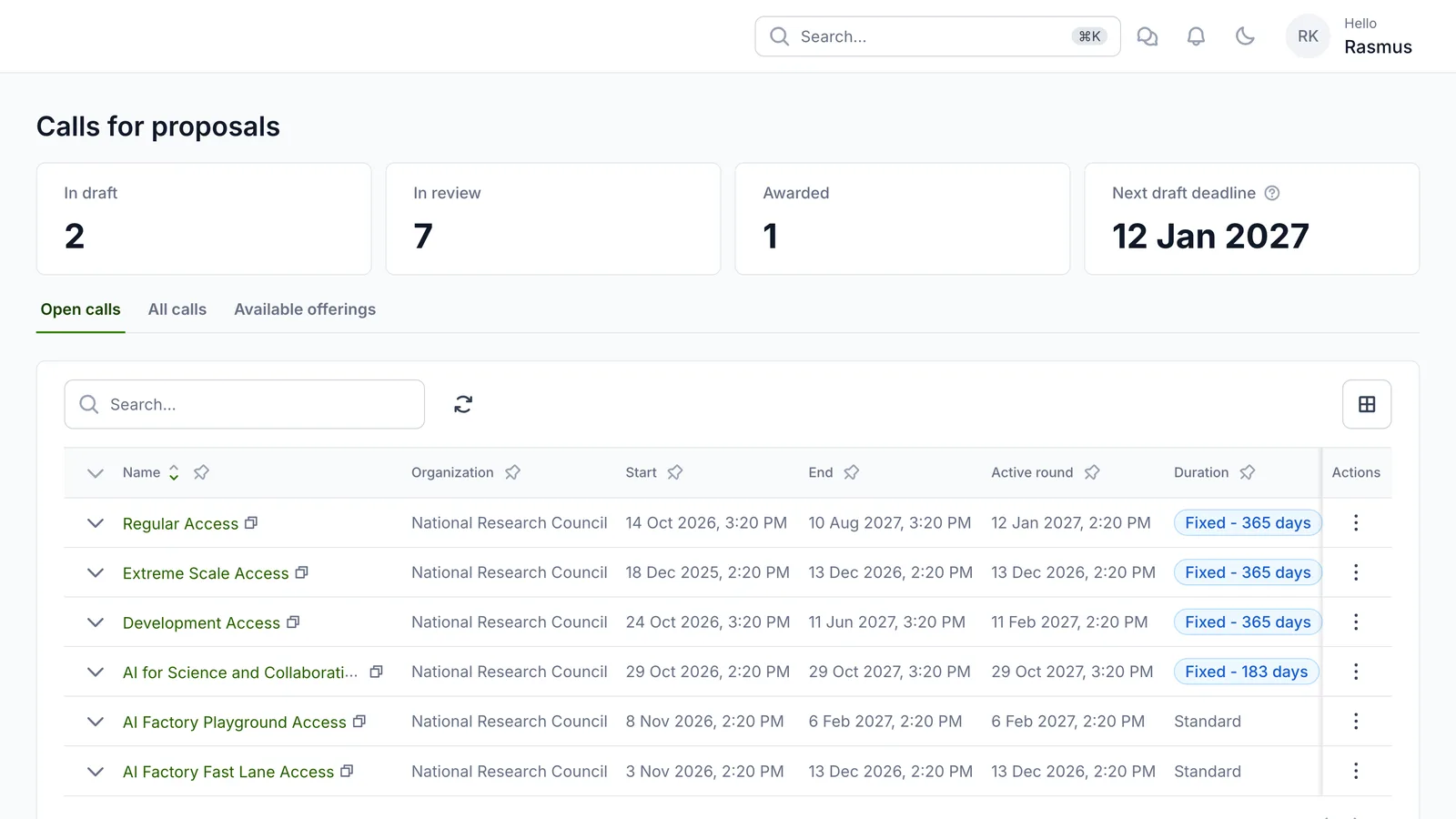
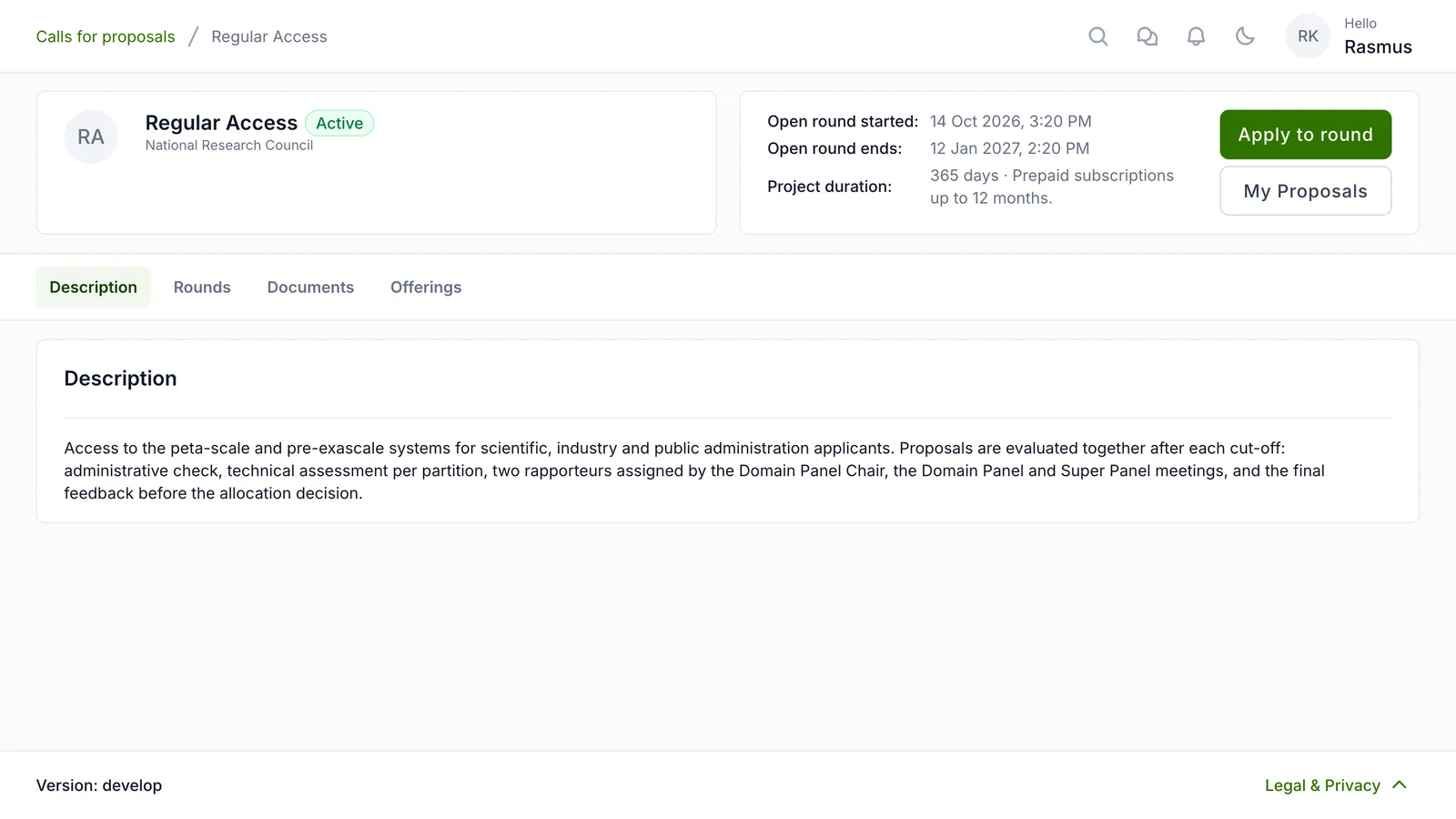
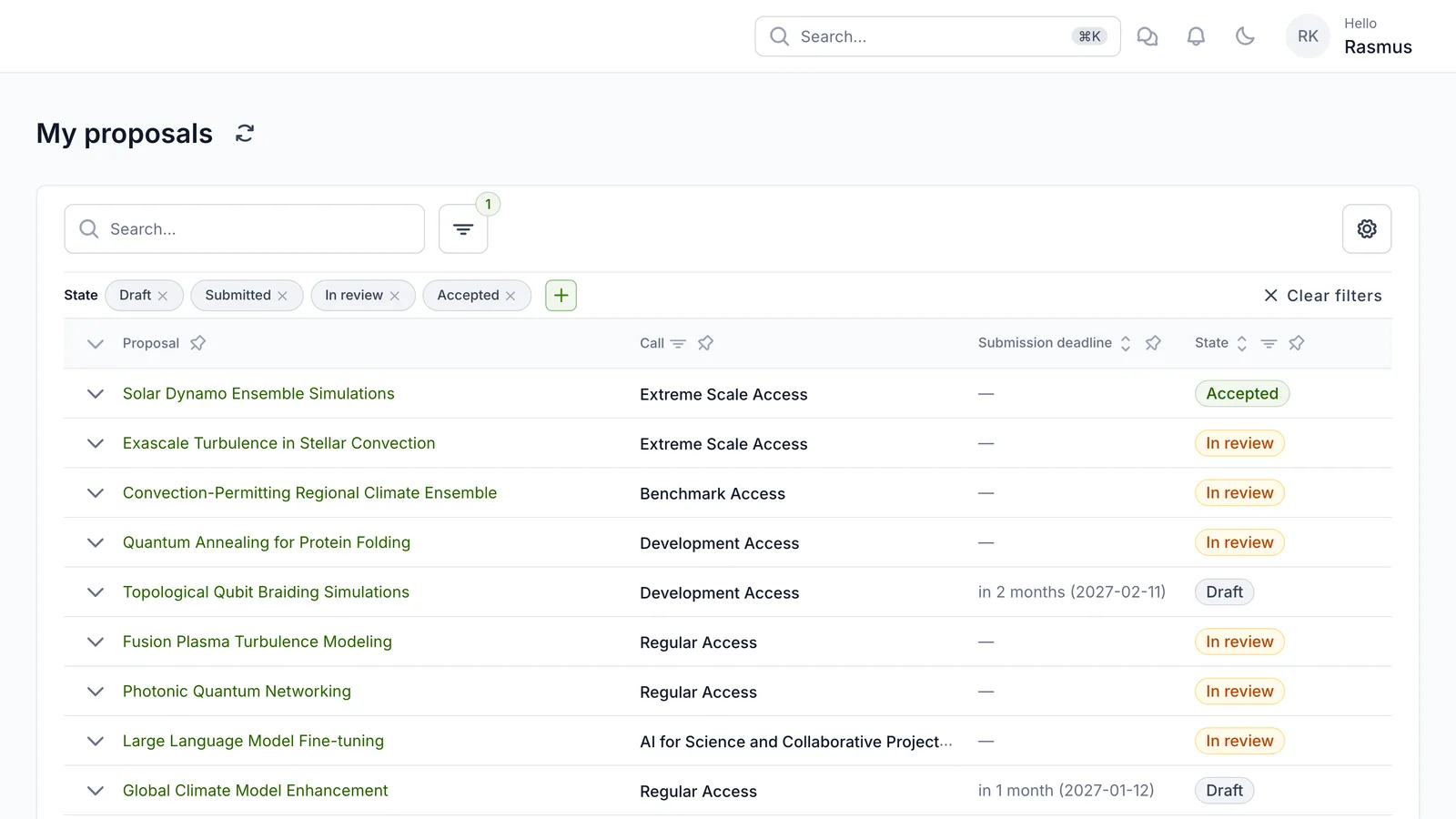
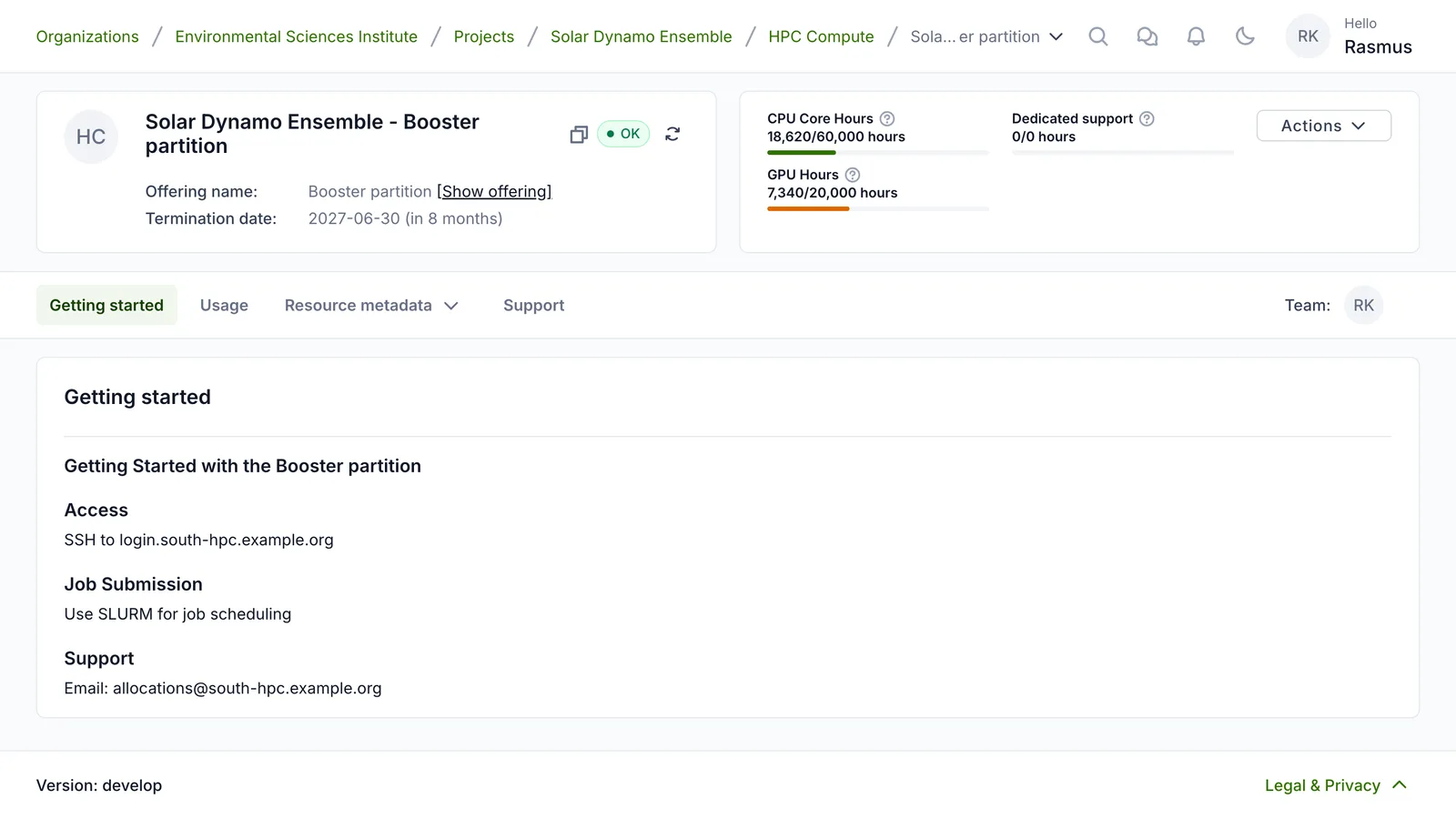
Recorded on a demo deployment: the organizations, people and numbers are made up.
Access modes
How Waldur fits
What stays with other systems
- The scientific judgement is the reviewers’ and the panel’s. Waldur organizes the process, records every step and enforces the rules set for it.
Further reading
- Call management Calls, rounds, proposals and how they become projects
- Workflow configuration The evaluation steps of a call
- Reviewer management Pools, expertise and assignment
- Conflicts of interest Disclosure and detection
- Allocation decisions From a decision to resources on the providers' systems
- Applicant guide Applying to a call and following a proposal
Implementation
Project phases
Call design
Describe a current call in Waldur, with its rounds, proposal form, workflow steps and criteria.
Reviewers and conflicts
Build the reviewer pool and its expertise profiles, and set the conflict-of-interest rules.
Providers and resources
Connect the providers whose resources the call awards, and the offerings applicants can request.
Pilot round
Run one round with a small group of applicants and reviewers, and adjust the workflow.
Production launch
Open the calls to all applicants, with sign-in, notifications and reports in place.